

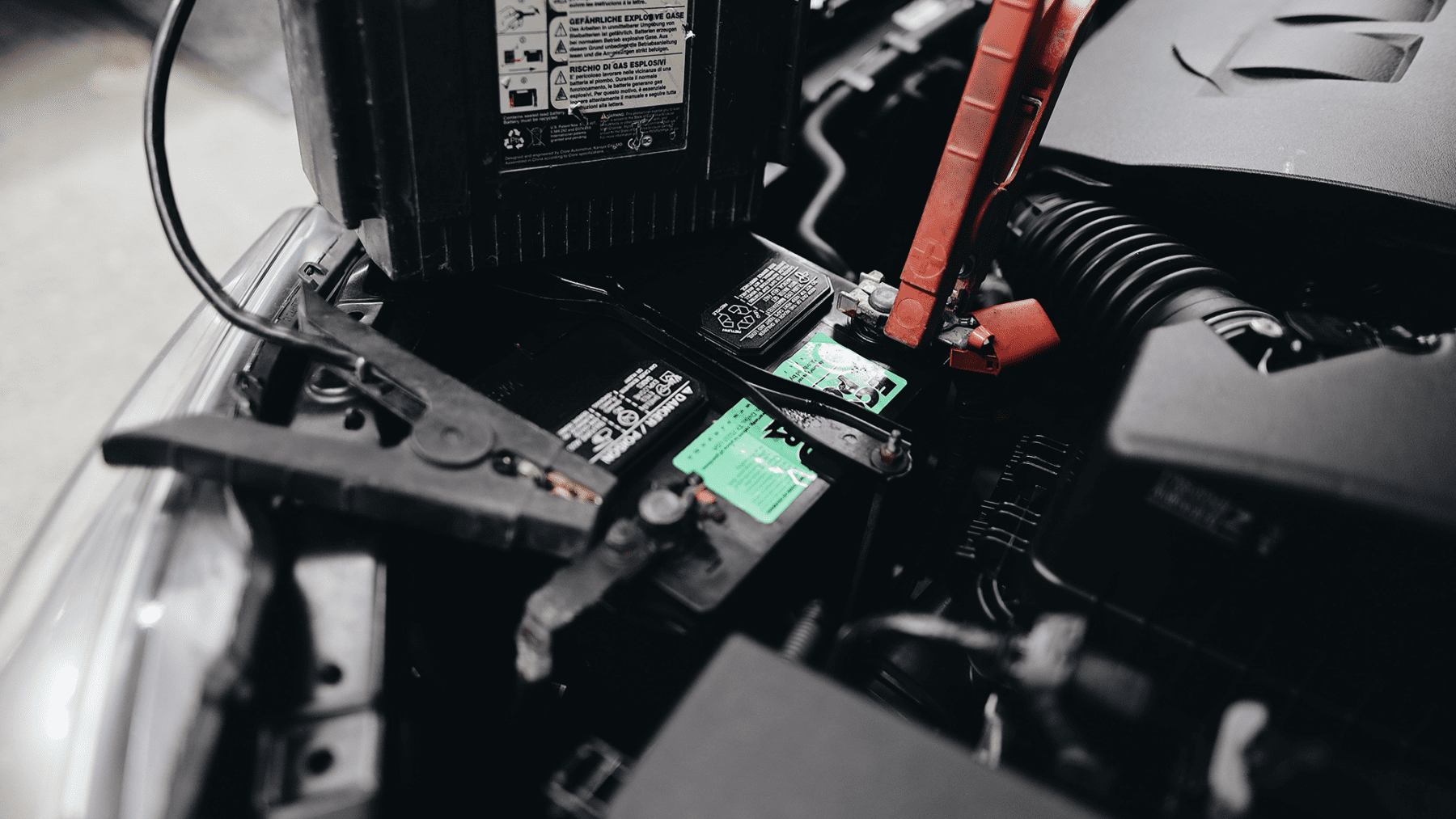

A car that will not start can change the whole mood of your day.
You may be leaving work, sitting in an apartment garage, stopping at a grocery store, parked near a beach lot, or getting ready to drive home after dinner. You press the start button or turn the key, and the vehicle does not start.
Maybe it clicks.
Maybe the dashboard lights flicker.
Maybe the engine turns slowly.
Maybe nothing happens at all.
When that happens, most drivers ask the same thing:
Do I need a jump start, battery replacement, mobile battery help, or towing?
This checklist can help you make a safer and clearer decision before you call for roadside help.
Check Your Safety First
Before you think about the battery, look around you.
A dead car in a driveway is frustrating. A dead car near traffic, inside a parking garage, or close to a freeway ramp can become unsafe.
Start with the basics:
- Turn on your hazard lights
- Move away from traffic if possible
- Stay in a safe area
- Share your location with someone you trust
- Use a map pin if the address is hard to explain
- Avoid standing in front of or behind the car near moving vehicles
- Do not open the hood if the area feels unsafe
If the vehicle is blocking traffic, involved in a crash, or creating a hazard, call emergency services first.
Your safety matters more than the vehicle.
Notice What the Car Does
A no-start problem can mean several things.
It may be a dead battery, but it can also involve the starter, alternator, ignition, wiring, fuel system, key fob, or another vehicle system.
Before you call for help, pay attention to what happens when you try to start the car.
Common signs include:
- One click
- Fast clicking
- Slow cranking
- Flickering dashboard lights
- Dim headlights
- No sound at all
- Engine cranks but does not start
- Warning lights stay on
- Car starts and dies again
Do not keep trying to start the vehicle again and again. Repeated attempts can drain the battery further and make the issue harder to solve.
Listen once or twice, then explain the symptoms clearly when you call.
If You Hear Clicking
Clicking often points to a weak or dead battery.
When the battery does not have enough power, the starter may not get enough energy to turn the engine. You may hear one click or several fast clicks.
Clicking may happen when:
- The battery is weak
- The battery is old
- The terminals are loose or dirty
- Lights were left on
- The vehicle sat too long
- The car has already needed more than one jump
A jump start may help if the battery is only drained.
If the clicking keeps coming back, the battery may need more than a quick boost.
If the Dashboard Lights Flicker
Flickering dashboard lights often mean the vehicle has low power.
The car may have enough power to turn on the lights but not enough power to start the engine. That is why the vehicle can look partly “on” but still not start.
You may notice:
- Flickering dashboard lights
- Dim headlights
- Weak interior lights
- Slow power locks
- A battery warning light
This often points to a battery issue, but it can also connect to the charging system.
If the Engine Cranks Slowly
Slow cranking means the engine is trying to start, but it does not have enough power.
This may happen when the battery is weak, the terminals are dirty, or the charging system is not keeping the battery healthy.
A slow crank is a warning sign.
If it happens more than once, do not ignore it. A battery that struggles today may fail completely tomorrow.
When a Jump Start May Be Enough
A jump start can help when the battery lost charge one time.
This may happen if the headlights stayed on, the interior lights drained the battery, or the vehicle sat unused for several days.
A jump start may be the right first step if:
- The battery died once
- The vehicle sat for a while
- Lights or electronics were left on
- The battery is not very old
- The vehicle starts normally after the jump
- No warning lights stay on
- The car keeps running after it starts
After a jump start, watch how the vehicle behaves.
If the car starts normally later, the problem may have been a one-time drain. If it struggles again, the battery may be weak.
When Battery Replacement Makes More Sense
A battery replacement may be the better choice when the battery is no longer reliable.
If your battery keeps dying, needs repeated jumps, or will not hold a charge, another jump may only delay the problem.
Drivers can request car battery replacement in Los Angeles when the battery keeps losing power, fails repeatedly, or no longer starts the vehicle reliably.
Battery replacement may make sense if:
- The battery keeps dying
- The vehicle needed several jump starts
- The car starts slowly often
- The battery is several years old
- The battery will not hold a charge
- The car starts after a jump but fails again later
- You do not want to risk getting stranded again
A simple rule helps:
One battery failure may need a jump start. Repeated battery failure needs a closer look.
When Towing Is the Safer Choice
Not every no-start issue should be handled with a jump or battery replacement.
Sometimes the issue is not the battery. The problem may involve the starter, alternator, ignition, wiring, fuel system, or another part of the vehicle.
Sometimes the vehicle starts but should not be driven.
Towing service may be safer if:
- The vehicle will not start after a jump
- The car starts but dies again quickly
- Warning lights stay on
- The vehicle overheated
- You smell smoke, fuel, or burning
- The vehicle was in an accident
- The steering, brakes, wheels, or suspension feel unsafe
- The vehicle cannot shift or roll
- Driving could make the damage worse
If the car is not safe to drive, do not force it.
A tow can protect you, the vehicle, and other drivers.
Why This Happens Often in Los Angeles
Los Angeles driving can be hard on car batteries.
Many drivers take short trips, sit in traffic, park in warm lots, and use electronics while the engine is off. Some vehicles sit for days because people work from home, travel, or use another car.
A battery may weaken faster when:
- The car is used mostly for short trips
- The vehicle sits for several days
- The weather is hot
- The battery is old
- The terminals are loose or dirty
- Lights or electronics are left on
- The alternator is not charging properly
- The vehicle has an electrical drain
That is why a battery can feel fine one day and fail the next.
A no-start problem also feels different depending on where it happens. A dead battery at home is annoying. A dead battery in a garage, near traffic, or late in the day can feel urgent.
Parking Garages Need More Information
A car that will not start in a parking garage can be harder to handle than one in an open lot.
The ceiling may be low. The space may be tight. Another car may block access. The vehicle may be close to a wall, curb, or pillar.
If your vehicle will not start in a garage, share:
- Garage address
- Parking level
- Clearance height
- Best entrance
- Gate code, if needed
- Whether the vehicle can roll
- Whether the steering works
- Whether another vehicle blocks access
- Whether the vehicle is parked close to a wall or curb
These details help the roadside team decide whether jump start service, battery replacement, or towing is the right choice.
Places Where Drivers Often Need Battery Help
A dead battery can happen almost anywhere in Los Angeles.
Common places include:
- Apartment garages
- Driveways
- Office parking structures
- Shopping center lots
- Grocery store parking lots
- Hotel parking areas
- Medical office lots
- School pickup areas
- Gas stations
- Residential streets
- Beach parking areas
- Freeway-adjacent lots
The more exact your location is, the easier it is for help to find you.
If the address is confusing, use a map pin and mention nearby landmarks.
What to Say When You Call for Roadside Help
Clear details save time.
When you call, share:
- Your exact location
- Nearby cross streets
- Your vehicle make and model
- Whether the vehicle uses a key or push-button start
- What happens when you try to start it
- Whether you hear clicking
- Whether dashboard lights turn on
- Whether the car was jumped recently
- Whether the battery has failed before
- Whether you are in a garage, lot, driveway, street, or freeway area
- Whether there is a gate code or access issue
You do not need to diagnose the vehicle yourself.
Just describe what you see, hear, and smell.
How to Reduce Another Battery Problem
No battery lasts forever, but a few habits can lower the chance of a surprise failure.
Try these steps:
- Turn off lights before leaving the vehicle
- Do not leave electronics running with the engine off
- Drive the vehicle regularly
- Watch for slow starts
- Keep battery terminals clean
- Replace an old battery before it fully fails
- Pay attention to warning lights
- Do not ignore repeated jump starts
If your battery has failed more than once, treat it as a warning.
Roadside Help Can Cover More Than Batteries
A dead battery is common, but it is not the only reason drivers need help.
Roadside problems can also include:
- Flat tires
- Car lockouts
- Fuel delivery
- Overheated vehicles
- Accident towing
- Motorcycle roadside assistance
- Vehicles stuck in tight spaces
- Vehicles that cannot be driven safely
That is why the right service depends on the full situation.
A driver may think they need towing when a jump start is enough. Another driver may think they need a jump when the vehicle actually needs transport to a repair shop.
Frequently Asked Questions
Q: What should I do first if my car will not start?
A: First, check your safety. Turn on your hazard lights, move away from traffic if you can, and share your exact location. Then request roadside help and explain what happens when you try to start the vehicle.
Q: Is clicking always a dead battery?
A: No. Clicking often points to a weak or dead battery, but it can also involve the starter, battery terminals, wiring, or another electrical issue.
Q: Can a jump start fix the problem?
A: A jump start may help if the battery is only drained. If the battery keeps dying or the vehicle fails again soon, battery replacement or repair may be needed.
Q: When should I replace the battery instead of jumping it?
A: Replace the battery if it keeps failing, starts slowly, will not hold a charge, or has needed several jump starts.
Q: What if the car starts after a jump but dies again?
A: That may point to a weak battery, alternator issue, charging-system problem, or another vehicle fault. It may not be safe to keep driving.
Q: Can battery help come to an apartment or office garage?
A: Yes, but garage details matter. Share the address, parking level, clearance height, entrance, gate code, and whether the vehicle can move.
Q: What if I do not know whether I need battery help or towing?
A: Explain the symptoms, location, and vehicle condition. A roadside team can help you decide whether jump start service, battery replacement, or towing is the better option.
Q: Is it safe to drive after a battery jump?
A: It depends. If the car starts normally and no warning lights stay on, you may be able to drive. If the vehicle runs poorly, dies again, overheats, or shows warning lights, stop and get help.
Q: What information should I give when calling for help?
A: Share your location, vehicle make and model, what happens when you try to start it, whether lights turn on, whether you hear clicking, and whether the battery has failed before.
Final Thoughts
A car that will not start does not always need the same service.
Sometimes a jump start is enough. Sometimes battery replacement is the smarter choice. Sometimes the issue is not the battery, and towing is safer.
Start with safety. Check the symptoms. Share your location clearly. Then choose the service that fits the situation.
For battery help, jump starts, and roadside support in Los Angeles, call Certified Roadside Assistance.
Open Daily: 8:00 AM–12:00 AM
Call (310) 343-3357

