
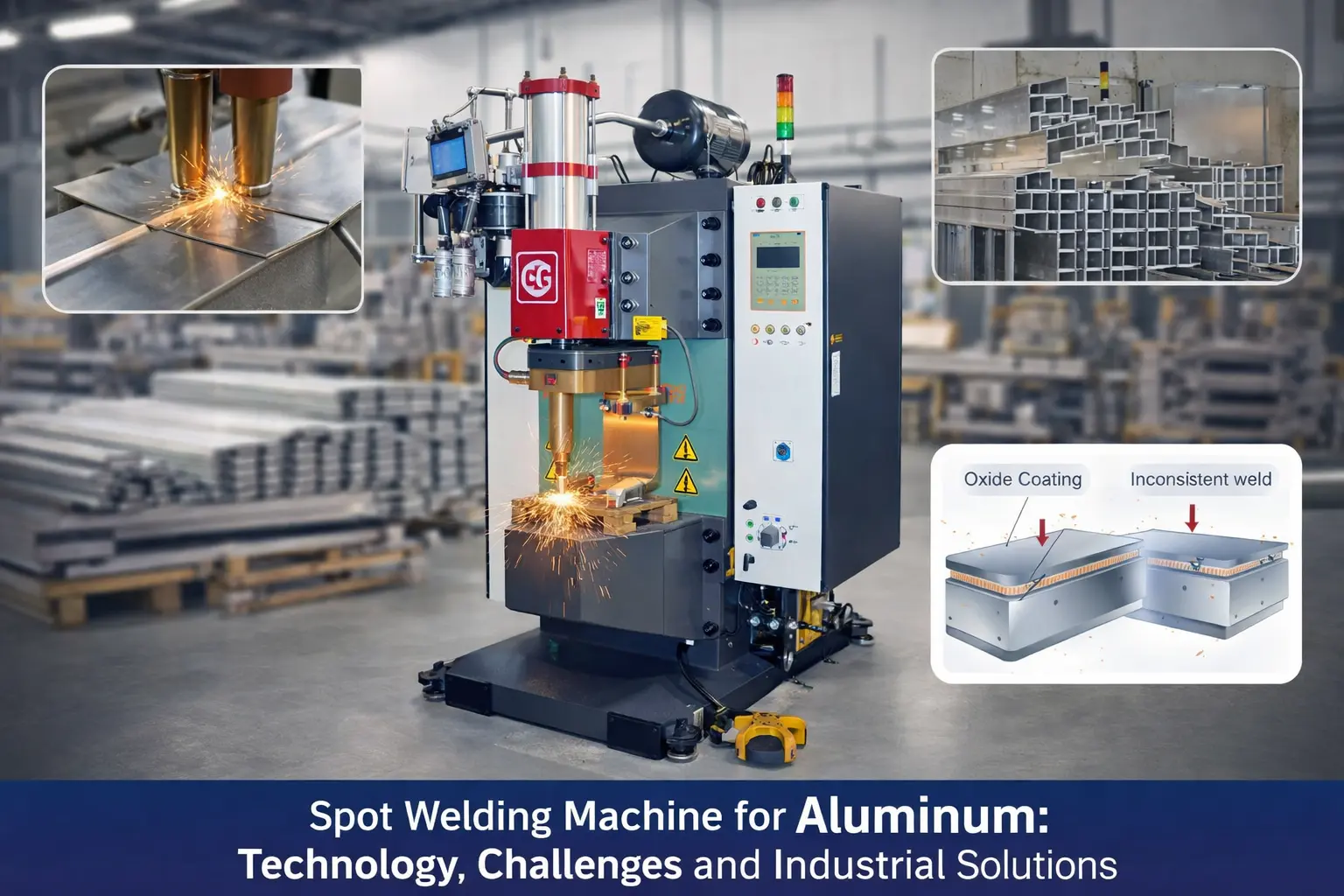

Aluminum has become a cornerstone material in modern manufacturing due to its lightweight, corrosion-resistant properties and excellent strength-to-weight ratio. From automotive components to aerospace assemblies, aluminum is increasingly replacing steel in high-performance applications. However, welding aluminum presents unique challenges, making the choice of equipment and process critical.
A spot welder for aluminum is a precision tool designed to deliver reliable, high-quality welds while minimizing material distortion. For manufacturing engineers, OEMs, and automation integrators, selecting the right aluminum spot welding solution is essential for productivity, consistency, and product performance.
Understanding Aluminum Spot Welding
Spot welding is a form of resistance welding where metal sheets are joined by applying pressure and passing an electric current through electrodes at the weld point. The electrical resistance of the metals generates localized heat, which melts the material, forming a weld nugget upon cooling.
Aluminum presents specific challenges for spot welding:
- High thermal conductivity: Aluminum dissipates heat quickly, requiring higher currents or longer weld times.
- Oxide layer formation: Aluminum naturally forms a thin oxide layer that can interfere with electrical contact.
- Softness of material: Excessive pressure or heat can distort thin sheets.
Modern spot welders for aluminum, like those from Heron Welder, incorporate precise control systems, advanced electrodes, and adaptive welding parameters to address these challenges and ensure consistent, high-quality welds.
Key Applications of Aluminum Spot Welding
Aluminum spot welding is widely used across industries that demand lightweight, durable components:
Automotive Manufacturing
Electric vehicles and lightweight car bodies increasingly use aluminum for doors, hoods, and chassis. Aluminum spot welders enable:
- High-speed production of body panels
- Consistent weld quality with minimal distortion
- Integration into automated production lines
Aerospace and Aviation
Aircraft structures rely on aluminum for its strength-to-weight ratio. Precision spot welding ensures:
- Strong, reliable joints in fuselage and frame assemblies
- Compliance with strict industry safety standards
- Reduced manual labor through automated welding cells
Electronics and Consumer Products
Aluminum housings, enclosures, and heat sinks benefit from spot welding due to:
- Minimal material deformation
- High repeatability for small batch or high-volume production
Choosing the Right Spot Welder for Aluminum
When selecting a spot welder for aluminum, manufacturers should consider:
1. Welding Current and Time Control
Aluminum requires precise adjustment of current and weld time. MFDC (Medium Frequency Direct Current) spot welders from Heron provide controlled, rapid current pulses ideal for aluminum’s high conductivity.
2. Electrode Design
Electrodes must be designed for aluminum, often using copper alloys with specific tips to reduce wear and improve thermal transfer. Heron’s advanced electrode solutions ensure longer life and better weld consistency.
3. Automation Integration
Modern factories demand automated welding lines. Heron spot welders can integrate seamlessly with robotic systems, conveyor setups, and quality monitoring sensors, improving efficiency and reducing manual errors.
4. Cooling and Maintenance
Effective cooling systems prevent electrode overheating and material distortion. Heron’s spot welders include robust water-cooled electrodes and maintenance-friendly designs, minimizing downtime.
Spot Welding vs. Other Aluminum Joining Methods
While spot welding is a go-to solution, it’s important to understand alternative techniques:
| Method | Advantages | Considerations |
|---|---|---|
| Spot Welding | Fast, automated, minimal filler | Sensitive to oxide, requires precise control |
| MIG/TIG Welding | Strong welds, versatile thickness | Slower, may require filler, higher heat input |
| Self-Pierce Riveting | No heat distortion, suitable for coated aluminum | Mechanical attachment may not match spot weld strength |
| Clinching | Quick, no filler, cost-effective | Limited to sheet thickness, may require secondary finishing |
Heron’s portfolio includes not only advanced spot welders but also FSPR (self-pierce riveting) and clinching systems, allowing manufacturers to select the best solution for each aluminum assembly challenge.
Best Practices for Aluminum Spot Welding
- Surface Preparation: Remove oils, debris, and oxide layers for optimal electrical contact.
- Electrode Care: Regular inspection and maintenance prolong electrode life and ensure consistent welds.
- Parameter Optimization: Adjust current, pressure, and weld time based on sheet thickness and alloy type.
- Automation and Monitoring: Use real-time monitoring systems to detect welding anomalies and reduce defects.
- Training: Ensure operators and engineers understand aluminum-specific welding dynamics.
Why Choose Heron for Aluminum Spot Welding
Heron Welder is a global leader in industrial welding and metal-joining solutions, offering:
- Advanced MFDC, capacitor discharge, and resistance spot welders optimized for aluminum
- Integrated automation systems for high-volume production
- Expertise in FSPR and clinching technologies for hybrid joining applications
- Global support, customization, and engineering consultation
Manufacturers relying on Heron benefit from consistent quality, reduced production downtime, and the ability to scale aluminum welding operations efficiently.
FAQs
1. Can spot welding be used for all aluminum alloys?
Yes, but welding parameters must be optimized for each alloy due to variations in conductivity, strength, and oxide formation.
2. What thickness of aluminum sheets can a spot welder handle?
Modern MFDC spot welders can handle sheets from 0.5 mm up to several millimeters, depending on the model and electrode configuration.
3. How does aluminum spot welding differ from steel?
Aluminum conducts heat faster, forms oxide layers, and is softer, requiring higher currents, precise electrode design, and careful parameter control.
4. Can aluminum spot welding be automated?
Absolutely. Heron’s spot welders are fully compatible with robotic and conveyor-based automated production lines.
5. How do I reduce electrode wear when welding aluminum?
Use electrodes with specialized copper alloys, ensure proper cooling, and maintain clean surfaces to minimize wear and extend electrode life.
Conclusion: Elevate Your Aluminum Production with Heron
Choosing the right spot welder for aluminum is critical for manufacturers seeking efficiency, quality, and scalability. Heron Welder combines advanced welding technology, automation-ready systems, and expert support to help factories optimize aluminum joining operations.
Contact Heron today to request a quote or consult on customized spot welding and automation solutions for your aluminum manufacturing projects.

