
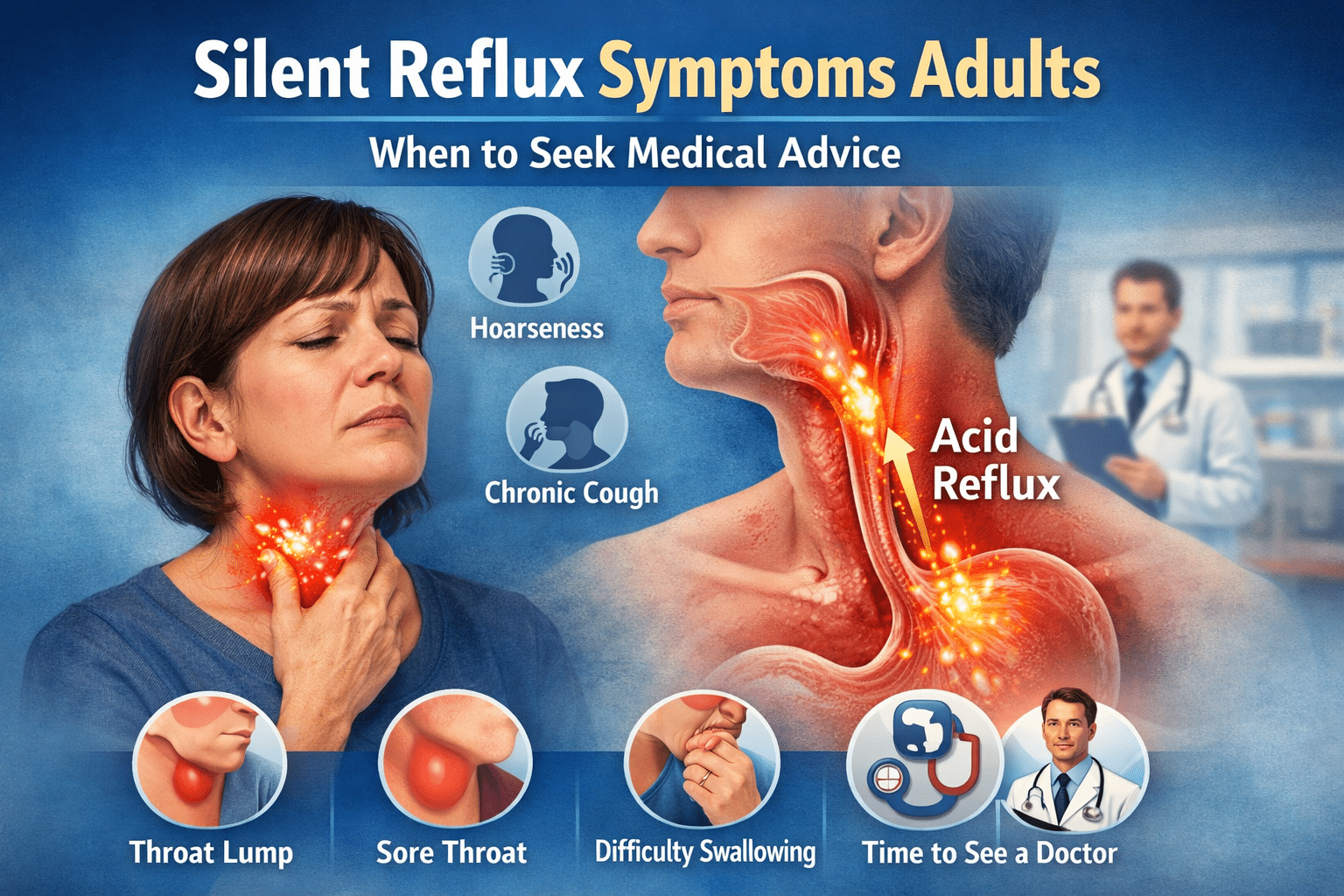

Silent reflux is a lesser-known but increasingly common digestive condition that affects many adults without the classic symptoms of heartburn. Medically referred to as laryngopharyngeal reflux (LPR), silent reflux occurs when stomach acid travels up the esophagus and reaches the throat or voice box often without causing noticeable pain. Because of its subtle presentation, many people live with silent reflux for months or even years before receiving a diagnosis.
Understanding silent reflux symptoms adults experience is essential for early detection and timely treatment. Left untreated, silent reflux can lead to chronic throat problems, voice changes, and long-term complications. This article explores the signs, causes, risk factors, diagnosis, treatment options, and when medical advice becomes necessary.
What Is Silent Reflux?
Silent reflux differs from gastroesophageal reflux disease (GERD) in one key wayit does not typically cause burning chest pain or acid regurgitation. Instead, stomach acid rises into the upper airway, irritating the throat, larynx, and nasal passages.
Unlike GERD, silent reflux often occurs during the daytime and can be triggered by normal activities such as talking, bending, or exercising. Because symptoms are subtle and overlap with other conditions, silent reflux is frequently misdiagnosed as allergies, asthma, or chronic sinus issues.
Silent Reflux Symptoms Adults Should Not Ignore
Recognizing silent reflux symptoms adults commonly experience can help prevent complications. These symptoms may vary in severity and often worsen over time if untreated.
1. Persistent Throat Clearing
One of the most common signs of silent reflux is the constant urge to clear the throat. This occurs due to irritation caused by acid exposure, even when mucus is not present.
2. Chronic Cough Without Illness
A dry, lingering cough that lasts for weeks or months, especially without signs of infection can be a strong indicator of silent reflux. This symptom is often worse in the morning or after meals.
3. Hoarseness or Voice Changes
Acid reaching the vocal cords can cause inflammation, leading to a raspy, weak, or strained voice. Adults who rely on their voice professionally are particularly vulnerable.
4. Sensation of a Lump in the Throat
Known as globus sensation, this feeling of something stuck in the throat is a hallmark silent reflux symptom. It often persists even after swallowing.
5. Sore Throat Without Infection
Recurring sore throats that are not linked to colds or flu may be caused by repeated acid exposure rather than bacteria or viruses.
6. Difficulty Swallowing
Silent reflux can cause subtle swelling in the throat, making swallowing feel uncomfortable or strained, even though food passes normally.
7. Postnasal Drip and Excess Mucus
Many adults with silent reflux experience excessive mucus production, often mistaken for sinus problems or allergies.
Why Silent Reflux Is Often Missed
Silent reflux symptoms adults experience do not always feel digestive in nature. Because heartburn is absent, many people do not associate their symptoms with acid reflux. Healthcare providers may initially explore respiratory or ENT-related causes, delaying proper diagnosis.
Another reason silent reflux is overlooked is that symptoms may come and go, making them easier to dismiss. However, intermittent symptoms can still cause chronic tissue damage.
Common Causes of Silent Reflux in Adults
Silent reflux develops when the muscles that prevent stomach acid from moving upward become weak or dysfunctional. Several lifestyle and medical factors contribute to this condition.
Dietary Triggers
- Fatty or fried foods
- Spicy meals
- Chocolate
- Caffeine
- Alcohol
- Citrus fruits
- Carbonated drinks
Lifestyle Factors
- Eating large meals
- Lying down soon after eating
- Obesity
- Smoking
- High stress levels
Medical Conditions
- Hiatal hernia
- Delayed stomach emptying
- Chronic sinusitis
- Sleep apnea
Understanding the underlying cause is crucial for managing silent reflux effectively.
Because silent reflux lacks obvious digestive discomfort, adults may unknowingly tolerate symptoms for extended periods.
When Silent Reflux Symptoms Adults Should Seek Medical Advice
While occasional throat irritation is common, persistent symptoms require professional evaluation. Adults should seek medical advice if:
- Symptoms last longer than three weeks
- Voice changes worsen over time
- Swallowing becomes difficult or painful
- Chronic cough disrupts sleep or daily activities
- Symptoms do not improve with lifestyle changes
Seeking timely care through platforms like HelloGP allows adults to access professional medical guidance without unnecessary delays.
How Silent Reflux Is Diagnosed
Diagnosis typically involves a detailed medical history and symptom assessment. Doctors may also use specialized tests to confirm the condition.
Diagnostic Methods Include:
- Laryngoscopy to examine throat inflammation
- pH monitoring to detect acid exposure
- Esophageal manometry to assess muscle function
Because silent reflux can mimic other conditions, ruling out infections, allergies, and asthma is often part of the diagnostic process.
Treatment Options for Silent Reflux
Effective treatment focuses on reducing acid exposure and healing irritated tissues. Management often involves a combination of lifestyle changes and medication.
Lifestyle Modifications
- Eat smaller, more frequent meals
- Avoid trigger foods
- Stay upright for at least 3 hours after eating
- Elevate the head during sleep
- Maintain a healthy weight
- Reduce stress
Medications
- Proton pump inhibitors (PPIs)
- H2 blockers
- Antacids
Medications are usually prescribed for several weeks to months, depending on symptom severity.
Natural and Preventive Measures
Many adults find relief by adopting preventive habits that reduce reflux episodes.
- Drink plenty of water
- Avoid late-night eating
- Practice mindful eating
- Limit throat clearing
- Incorporate gentle exercise
Consistency is key symptoms may take time to improve, even with treatment.
Potential Complications If Left Untreated
Ignoring silent reflux symptoms adults experience can lead to long-term damage, including:
- Vocal cord lesions
- Chronic laryngitis
- Narrowing of the airway
- Increased risk of throat cancer (rare but possible)
Early intervention significantly reduces these risks.
Living With Silent Reflux: Long-Term Outlook
Silent reflux is manageable with proper care and lifestyle adjustments. Many adults experience substantial improvement within weeks of treatment, while others require long-term maintenance strategies.
The key is awareness. Recognizing subtle symptoms early and understanding when to seek medical advice empowers adults to protect their throat health and overall well-being.
Final Thoughts
Silent reflux may not announce itself loudly, but its effects can be disruptive and long-lasting if ignored. Understanding silent reflux symptoms adults commonly face is the first step toward timely diagnosis and effective management. If symptoms persist or interfere with daily life, seeking medical advice is essential for preventing complications and restoring comfort.

