


Europe’s solar inverter sector is gaining importance as the region expands solar photovoltaic capacity, strengthens energy independence, and modernizes electricity infrastructure. Solar inverters are essential components in photovoltaic systems because they convert direct current generated by solar panels into alternating current used by homes, businesses, industries, and power grids. As solar deployment increases across rooftops, commercial buildings, industrial sites, and utility-scale projects, inverter demand is becoming closely linked with Europe’s clean energy transition.
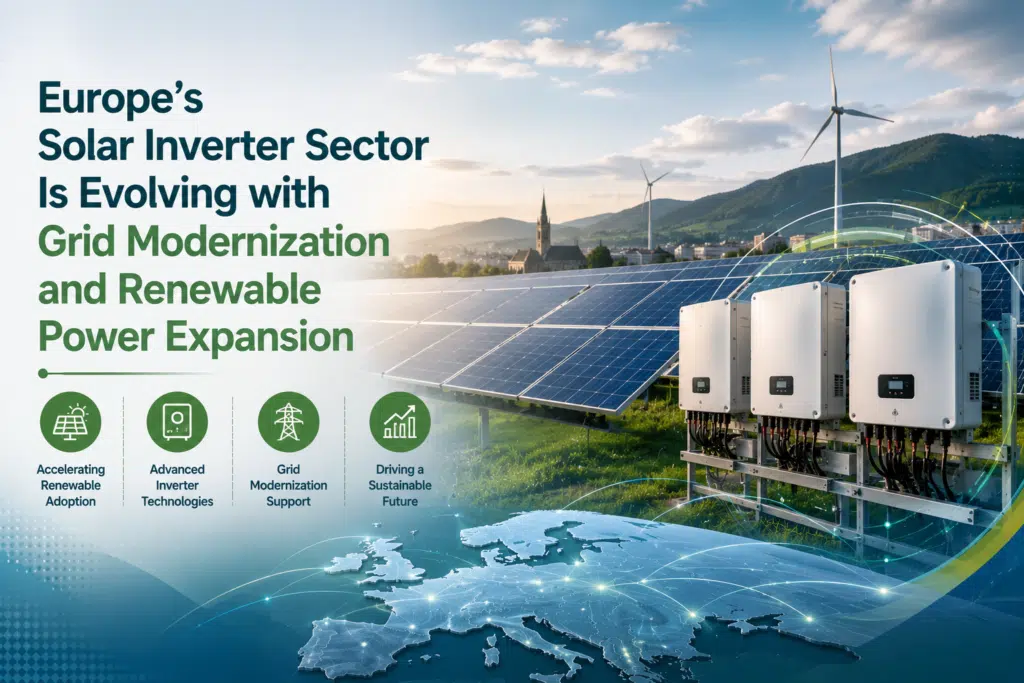
According to MarkNtel Advisors, Europe’s solar inverter sector was valued at around USD 3.1 billion in 2025 and is projected to grow from USD 3.31 billion in 2026 to USD 4.91 billion by 2032. The sector is expected to grow steadily at a CAGR of 6.8% during 2026–2032, supported by rapid solar PV installations, Germany’s leading position, strong utility-scale deployment, and rising adoption of string inverters across residential, commercial, and industrial systems.
Solar PV Expansion Is Creating Strong Inverter Demand
Solar inverters are required in every photovoltaic installation, making their demand directly connected to new solar capacity additions. Europe’s renewable energy plans have created a strong foundation for solar growth, especially as countries reduce fossil fuel dependence and increase domestic clean electricity generation.
The European Commission’s solar energy strategy states that the EU surpassed its objective of delivering over 380 GW of solar photovoltaic capacity by 2025 and aims for at least 700 GW by 2030. This scale of deployment creates sustained demand for inverters that can support grid connection, voltage management, performance monitoring, and system safety across multiple project sizes.
Utility-Scale Projects Lead Application Demand
Utility-scale solar accounts for around 59% share of Europe’s solar inverter demand in 2026. This dominance reflects large solar parks being developed to support national renewable energy targets, corporate power purchase agreements, and electricity market decarbonization. Utility-scale projects typically require high-capacity inverters, advanced monitoring, grid-support functions, and reliable long-term operation.
Inverters used in these projects must manage large power flows and comply with grid codes. They also help stabilize solar output, detect faults, and support system-level efficiency. As Europe adds more renewable electricity to the grid, inverter technology is becoming more important for maintaining power quality and system reliability.
Germany Holds the Strongest Regional Position
Germany accounts for about 26.7% share of Europe’s solar inverter sector, making it the leading country in 2026. The country’s leadership is connected to its mature solar ecosystem, strong rooftop adoption, established installer base, utility-scale development, and long-standing renewable energy policy framework.
Germany’s energy transition continues to support distributed solar, commercial rooftop systems, and grid modernization. The European Environment Agency’s renewable energy overview notes that renewable energy production and consumption have increased rapidly in the EU due to dedicated policies and technological progress. Germany remains one of the central contributors to this broader regional shift, creating continuous demand for inverter upgrades, replacements, and new installations.
String Inverters Remain a Major Technology Choice
String inverters represent around 46% share of Europe’s solar inverter demand by type. Their popularity is linked to flexibility, modular design, easier installation, and suitability across residential, commercial, and utility applications. String inverters are often preferred where system design requires multiple panel strings, easier maintenance, and scalable deployment.
Compared with central inverters, string inverters can provide more granular monitoring and design flexibility. This is useful for rooftops with shading variations, commercial facilities with complex layouts, and utility projects that require modular expansion. As inverter systems become smarter, string inverters are also being integrated with digital monitoring platforms, storage systems, and grid-support functions.
Smart and Hybrid Inverters Are Becoming More Relevant
Europe’s solar systems are increasingly being paired with battery storage, electric vehicle charging, energy management platforms, and demand-response tools. This is increasing interest in smart and hybrid inverters. These systems can manage solar generation, battery charging, grid export, backup power, and real-time performance data.
The International Energy Agency’s renewables analysis states that solar PV capacity growth is expected to dominate global renewable expansion over the next five years. As solar penetration rises, inverters must do more than convert electricity. They must support grid flexibility, communication, cybersecurity, and storage integration, especially in regions with high renewable shares.
Grid Integration Is a Key Challenge
Rapid solar growth also creates grid integration challenges. High solar penetration can lead to voltage fluctuations, congestion, curtailment, and balancing needs. Inverters can help address some of these issues through reactive power control, voltage ride-through capability, frequency support, and remote monitoring. However, these functions require clear grid codes, digital coordination, and investment in network infrastructure.
ENTSO-E’s strategic roadmap highlights the need to prepare Europe’s power system for a more complex, interconnected, and changing electricity environment. As inverter-based resources grow, grid operators and equipment suppliers will need stronger coordination to maintain reliability.
Cybersecurity and Supply Chain Resilience Are Emerging Concerns
Modern solar inverters are increasingly connected devices. They use software, communications modules, monitoring platforms, and remote-control features. This creates operational benefits but also raises cybersecurity and supply chain concerns. European buyers are likely to pay greater attention to device security, data protection, firmware updates, and supplier transparency.
For utilities and large commercial users, inverter procurement may increasingly consider technical performance alongside cybersecurity standards, after-sales support, and compliance with European grid requirements. This could influence supplier selection and encourage greater focus on secure, interoperable inverter platforms.
Looking Ahead
Europe’s solar inverter sector is expected to expand as solar PV deployment accelerates, utility-scale projects grow, rooftop installations mature, and storage integration becomes more common. With the sector projected to reach USD 4.91 billion by 2032 at a CAGR of 6.8%, demand is likely to remain strongest in Germany, utility-scale applications, string inverters, smart inverters, and hybrid systems. The long-term direction will depend on grid readiness, policy stability, digital monitoring, cybersecurity, storage adoption, and the ability of inverter technologies to support Europe’s increasingly solar-powered electricity system.

